
Choosing Sustainable Materials for an Intentional Home
|
|
Time to read 7 min
|
|
Time to read 7 min
We all have moments where we’re simply trying to make a home feel like our own—choosing pieces that are beautiful, affordable, and reflect our style in that season of life. A new shelf, a trending material, something that feels like it fits right now.
But we rarely stop to ask: Where did this come from?
What is it made of—and what did it take to bring it into our homes?
The materials that surround us aren’t just functional or decorative—they carry environmental and human stories, whether we realize it or not.
During my childhood, I grew up hearing stories about a simple wooden rocking chair. Handmade by my great-grandfather in Iowa, now four generations of babies have been rocked to sleep in that chair including my own.
It’s sturdy, well-made, and full of history.
For a long time, though, the rest of my home didn’t reflect that same story. Furniture came and went with trends and convenience, often without much thought.
That perspective shifted dramatically when a cheaply made shelf fell off the wall, crashing down under the weight of books and plants. It was a very startling jolt that made a profound impact on me.
I was left pondering - do I replace it with another cheap shelf or do I invest in something durable and intentional? The answer changed the way I think about my home—and the story behind every piece I bring into it.
Low prices often come at a high cost—just not one we see on the tag.
Mass-produced furniture often starts far from home—in forests cleared for timber and factories producing pieces as quickly and cheaply as possible.
Deforestation drives much of this process. Forests cleared for fast furniture production lead to loss of biodiversity, soil degradation, and increased carbon emissions.
Communities that rely on these forests for generations are often displaced or exploited. Factory workers may endure poor labor conditions, while the products they make are sold cheaply elsewhere.
Low prices may seem tempting, but the hidden environmental and human costs are high.
It’s a reminder that the choices we make at home are more connected to the health of our planet than we might realize—something Earth Day invites us to reflect on each year.
After learning more about the impact behind mass-produced materials, I started asking a different question—not just what should I avoid, but what should I choose instead?
The shift doesn’t have to be perfect—it just needs to be intentional.
For larger furniture pieces, solid wood is one of the most durable and sustainable materials to consider. Handmade pieces, in particular, are built to last for years (often generations), rather than needing to be replaced every few seasons.
Of course, new handcrafted furniture isn’t always within budget—and that’s where secondhand becomes a great option. Vintage and pre-owned solid wood pieces are often higher quality than many new alternatives, and choosing them helps extend the life of sustainable materials already in circulation.
For smaller pieces—like decor and accents—you have more flexibility to be intentional. Choosing artisan-made items and sustainable materials is a simple way to bring beauty into your home while supporting more thoughtful production.
These are the pieces that add warmth, texture, and personality—and where your choices can directly support skilled makers and sustainable practices.
At Shelf Love, this is where we focus—curating small-batch, artisan-crafted pieces made from natural, sustainable materials, designed to bring meaning and story into the spaces you’re creating.
Slowing down isn’t about doing everything differently all at once. It’s about making a few more thoughtful choices along the way.
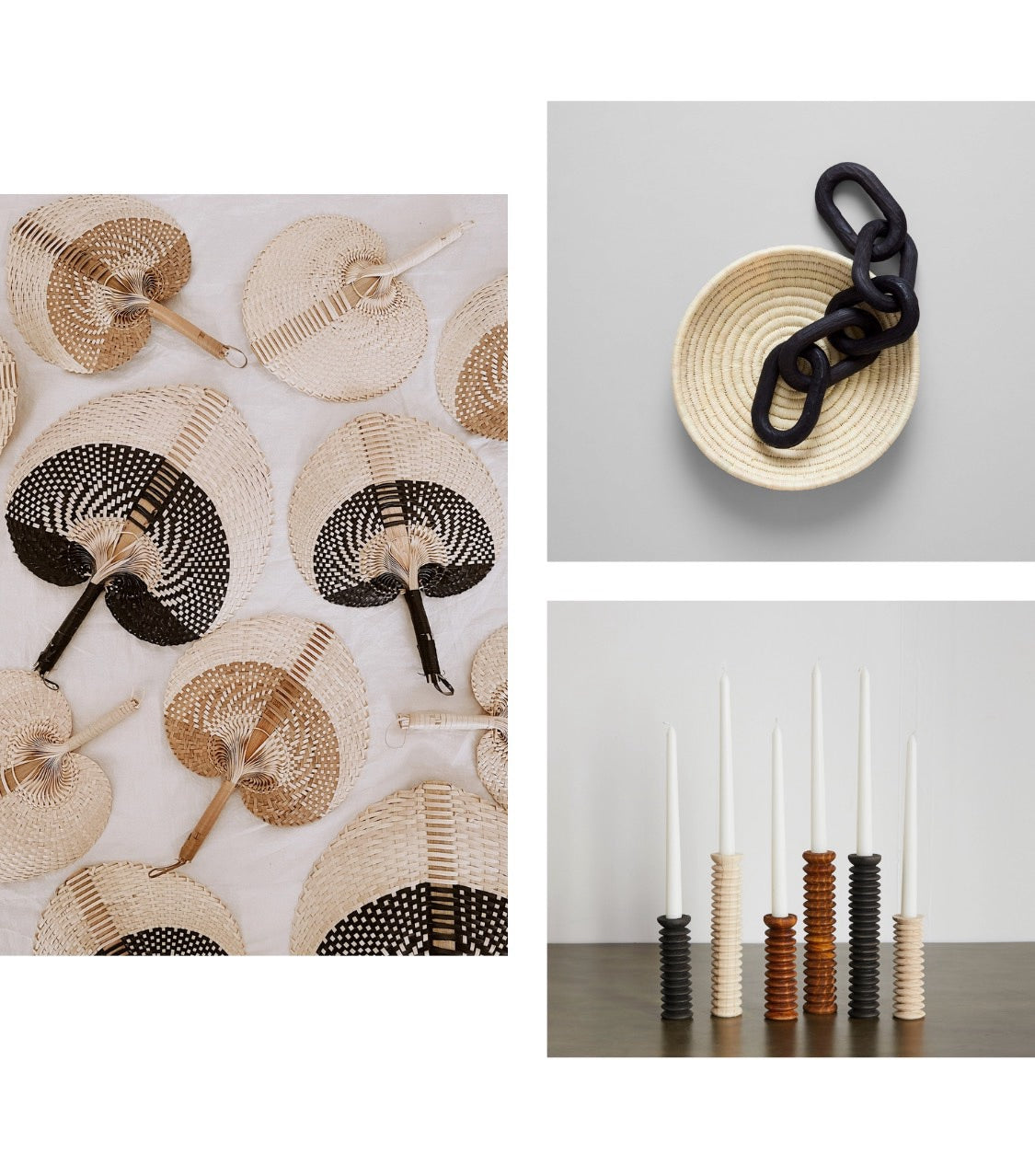
Some of the most inspiring home pieces come from natural materials shaped by skilled hands. Each piece carries heritage, skill, and story.
When we begin to look beyond mass production, something truly special emerges—not just better materials, but deeper stories.
Some of the most beautiful pieces in a home don’t come from factories. They come from natural, sustainable materials shaped by skilled hands, using techniques passed down through generations. Each piece carries meaning, history, and care.

In Uganda, women artisans create stunning baskets from natural Raffia and banana fibers— sustainable materials that are both renewable and deeply rooted in local tradition. The Banana Fiber Large Breaking Waves Basket is a handwoven piece that blends organic textures with minimalist design, perfect for a shelf, wall, or tabletop display.
Each basket is crafted by a women-led cooperative that provides fair employment, skills training, and meaningful work for marginalized community members—including widows and people with disabilities. The fibers are hand-dyed using natural plant-based or AZO-free dyes, and each basket is woven over days or even weeks, with artisans balancing their household responsibilities alongside their craft.
These baskets are more than decoration—they are the product of generations of knowledge, patience, and care, bringing both texture and story into a home.

In Honduras, the artisan partners of Meso Goods work with locally sourced terracotta clay—one of the most timeless sustainable materials— shaping each piece by hand using techniques rooted in generations of cultural tradition. The process begins with the earth itself—natural clay gathered from the surrounding landscape—then formed, dried, and fired in small batches using time-honored methods.
This approach reflects a deep respect for both material and environment. Nothing is rushed or overproduced; each piece is created with intention, using locally sourced, sustainable materials that honor both place and process. The addition of hand-formed iron details brings a sculptural element, blending raw, natural texture with thoughtful design.
The Ella Terracotta Vessel is one example of this craft—a piece that carries the warmth of the earth and the story of the hands that shaped it. More than a decorative object, it’s a reflection of heritage, sustainable materials, and a way of creating that works in harmony with the natural world.

In India, the artisan partners of Matr Boomie carry forward a rich tradition of craftsmanship that honors both material and method. Working with sustainable materials—including responsibly sourced, cruelty-free bone (often a byproduct), along with brass and wood—their process reflects a thoughtful approach to using what already exists, rather than extracting more from the earth.
Each piece is shaped through time-honored techniques, where precision and patience are just as important as the materials themselves. This kind of work isn’t rushed; it’s learned over years and passed down through generations, preserving cultural knowledge while creating meaningful livelihoods for artisan communities.
The Mukhendu Black and White Picture Frame is one expression of this tradition—a delicate, hand-finished piece that quietly reflects the care, skill, and intention behind it. More than just a frame, it’s a reflection of sustainable materials, craftsmanship, and harmony with the natural world.
Each piece carries a story—of skill, heritage, and care.
When we start to look beyond mass production and understand the stories behind the pieces we bring into our homes, the reason for choosing sustainable materials becomes clear. It isn’t just about the aesthetics—it’s about the impact we create, both seen and unseen.
At Shelf Love, we think about sustainable materials across three interconnected pillars:
Sustainable materials respect the earth. Natural fibers, terracotta, responsibly sourced wood, and cruelty-free bone are renewable, biodegradable, and harvested in ways that work with ecosystems rather than against them.
By choosing these materials, we reduce carbon emissions, limit waste, and help preserve forests and biodiversity. Unlike mass-produced, chemically treated furniture, artisan-made and eco-conscious pieces honor the land and the natural cycles that sustain it.
Sustainable materials support people, not just profits. When items are crafted ethically, artisans earn fair wages, gain skills, and have the opportunity to preserve traditional techniques.
From the women weaving baskets in Uganda, to the artisans crafting terracotta vessels in Honduras, to the bone inlay specialists in India—each piece weaves a story of empowerment, resilience, and cultural preservation.
Low prices may be tempting, but they often come at a hidden human cost. Choosing consciously ensures that the hands behind the work are respected, compensated, and celebrated.
Finally, sustainable materials help us create homes with soul. Each item carries a story, a skill, a connection to a place and a person. Pieces that are built to last—crafted with care and intention—bring depth and warmth that mass-produced furniture cannot replicate.
A home filled with thoughtfulness and purpose doesn’t just look beautiful—it feels meaningful. It reflects values, intention, and a gentle respect for both the planet and the people who inhabit it.
When we understand these pillars, the choice becomes clearer. Decorating our homes doesn’t have to be about speed or convenience—it can be about thoughtfulness, intention, and care.
And making that shift doesn’t have to feel overwhelming. Even small, deliberate decisions can make a real difference.
Even small, intentional decisions add up.
Choose natural, renewable materials – terracotta, bamboo, raffia, sustainably sourced wood.
Buy fewer, better pieces – invest in longevity and timeless design.
Ask where and how items are made – learn the story behind your purchases.
Support artisan-made goods – preserve culture and provide fair work.
Avoid “fast furniture” – cheap, disposable items carry hidden costs.
💛 A Mindful Choice: Replacing just one mass-produced item with an artisan-crafted, sustainable piece is a meaningful step.
At Shelf Love, our collections are thoughtfully sourced, sustainably made, and artisan-crafted. From handwoven baskets to terracotta vessels and bone-inlay frames, each item carries story, skill, and cultural heritage.
Our homes aren’t just styled—they’re intentional. They reflect respect for the planet and the people who create the things we love.
Thoughtful, sustainable choices don’t require perfection. Even small steps—choosing one artisan piece over a mass-produced alternative—can create lasting impact.
When we select pieces made in harmony with the earth and the hands that shape them, we’re not just decorating a home—we’re shaping a more thoughtful, connected, and beautiful world.
This Earth Day, consider not just what you bring into your home—but the story behind it, and the impact it leaves behind.
Homes filled with intention feel as good as they look.