
Slow Decorating: A Founder’s Perspective
|
|
Time to read 6 min
|
|
Time to read 6 min
A quieter approach to creating a home—one piece at a time
Let’s talk about the concept of slow decorating.
You may already be familiar with the term—or you may be scratching your head. The simplest way to think about it is as the home-decor equivalent of slow fashion. At its core, slow decorating is about slowing down when it comes to purchasing for your home, and adding intention and thought behind every piece you bring in.
This concept is near and dear to our hearts. Not only has slow decorating been an important lifestyle shift for me and my co-founder, Michelle—it’s largely why we started Shelf Love Collective in the first place.
We were frustrated by our options when it came to home décor. It felt difficult to find brands we could truly trust—pieces that were made ethically, crafted with high-quality materials, and free from unnecessary toxins. What began as personal research slowly evolved into an idea. That idea eventually became Shelf Love.
Slow decorating is the practice of accumulating home décor slowly, thoughtfully, and with intention. A huge part of it is pausing to examine why you want something before purchasing it.
Before I bring a new piece into my home, I ask myself:
Does this item add real beauty or value to my life?
Can I see myself enjoying it years from now?
Do I already have a place for it in my home?
These questions help me stay grounded and dramatically reduce buyer’s remorse. They create a natural pause—one that turns shopping into a more conscious, satisfying experience.
Slow decorating is also about discovering your personal decorating style rather than following trends or fads. It’s about asking yourself what kind of feeling you want to create in your home—and then identifying the colors, textures, and materials that support that feeling.
When you take time to understand what you genuinely love, you’re far more likely to choose pieces that stand the test of time. That doesn’t mean your style can’t evolve. Just like fashion, our homes can shift with seasons and life stages. But slowing down gives you the space to make choices you feel good about—now and later.
👉 GETTING STARTED TIP: Create a Pinterest board and save interior images that immediately speak to you. Focus less on perfection and more on feeling. When you look at the board as a whole, you’ll likely start to notice patterns—recurring colors, materials, or styles. This exercise can be incredibly helpful the next time you feel tempted by an impulse purchase. You can pause and ask: Does this align with the feeling I want to create in my home?
At its heart, slow decorating is a mindset shift. Many people find that once they start shopping more intentionally for their homes, the habit naturally extends to clothing, beauty products, cleaning supplies, and even food.
Myth #1: Slow decorating is extreme minimalism
A common misconception is that slow decorating means your home will feel sparse or museum-like. In reality, slow decorating isn’t a décor style at all—it’s simply a way of accumulating things.
For me personally, slow decorating involved reassessing what I already owned and letting go of pieces that didn’t serve me. But that was a personal choice, not a requirement. While slow decorators often have fewer trend-driven or disposable items, it doesn’t mean your home can’t feel layered, lived-in, or full of personality.
Myth #2: It is only for wealthy people
Another myth is that slow decorating isn’t affordable. We’d argue the opposite. While higher-quality pieces may cost more upfront, they’re often kept for decades—not replaced every year or two.
When we buy intentionally, we impulse buy less. Over time, many people are surprised to find that their spending actually decreases. Your bank account tends to appreciate slow decorating just as much as your home does.
Myth #3: Slow decorating is just a marketing ploy
We understand skepticism around buzzwords. But slow decorating isn’t about labels—it’s about transparency. When you take the time to understand who made a product, what materials were used, and whether the artisan was paid fairly, the price begins to make more sense. Context changes everything.
We live in an incredibly fast world. It has never been easier to impulse buy. With a few taps, something can arrive at our doorstep within hours.
It’s no mystery why overconsumption has become such a problem. We live in a culture of constant marketing and that normalizes buying and discarding. Scarcity messaging and trend cycles have trained us to consume quickly and often.
But once you learn the realities behind fast fashion, fast furniture, and mass production, it’s hard to unsee them.
The fashion industry alone produces roughly 92 million tons of waste each year. Synthetic fibers shed microplastics into our oceans. Textile dyeing is one of the largest contributors to global water pollution. And the human cost is devastating—less than 2% of garment workers earn a living wage, many working in unsafe and exploitative conditions.
That information was eye-opening for us—and it led to another question: What about furniture and décor?
While the statistics aren’t always as visible, the story is similar. Mass-produced furniture generates enormous manufacturing waste, contributes to deforestation, and is discarded at staggering rates. Many low-cost pieces are made using toxic chemicals that not only harm workers during production, but also lower indoor air quality once they enter our homes.
None of this is easy to sit with. But it’s also empowering.
Kelsey’s Perspective: Why We Chose to Slow Down
For a long time, I convinced myself that it wasn’t my fault my life felt filled with cheaply made stuff everywhere I looked. I told myself I was simply a victim of multimillion-dollar marketing campaigns and a culture that constantly pushes us to buy, buy, buy. Acquiring and discarding “stuff”—along with clothing—has been completely normalized, and a scarcity mindset has been quietly reinforced for years.
At some point, I really took stock of what I was surrounded by in my home. What I saw was clutter. Items that may have been trendy at one point, but felt largely meaningless to me. I constantly felt like I needed more, while being endlessly susceptible to impulse buys. There was very little in my home that felt valuable enough—emotionally or practically—that I’d want to pass it on to my children someday.
I also began to notice a direct connection between my stress levels and the clutter in my home. With small children, limited space, and the constant effort of shuffling things from one place to another just to maintain a sense of order, I eventually reached a breaking point. I had enough.
So I purged—slowly, intentionally, and item by item. It wasn’t easy, and at times it felt overwhelming. But I’ve never looked back.
Now, years later, I truly believe that less—but better—is more. I spend far less time organizing and far more time present with my family. I’m no longer stressed when I look around my home. There is space to breathe. And that feeling is priceless.
Michelle’s Perspective: Living with the In-Between
Slow decorating can feel uncomfortable at times. It goes against nearly everything our instant-gratification culture has trained us to expect.
Michelle often shares how this has shown up in her own life. About a year ago, she and her husband moved into a freshly remodeled home after living with family for five years—and before that, in a small condo. They didn’t have much furniture to begin with, and much of what they did have were hand-me-downs (and not the charming, heirloom kind).
She knew going in that if they were going to do this thoughtfully, it would take time.
Now, a year later, there are still blank walls, empty rooms, and shelves that feel sparse. And some days, that can feel uncomfortable—especially when we’re constantly surrounded by perfectly styled homes on social media and TV.
But every piece they’ve brought in—whether secondhand or something they chose to invest in—was selected with intention and care. And because of that, those pieces bring real joy every single day.
This is the part of slow decorating that doesn’t always get talked about: the patience it requires, the restraint, and the trust that a home doesn’t need to be “finished” to be meaningful. Sometimes, leaving space is part of the process.
Because when we slow down—when we ask questions and choose quality over convenience—we become part of the solution. We support businesses that value people and the planet. We create homes filled with pieces that mean something to us.
Slow decorating is, in many ways, a quiet act of resistance. A choice to buy less, but better. To demand transparency. To value craftsmanship and longevity.
If we ask for better, we get better.
Let’s choose to shop better—together.
Add intention to your space
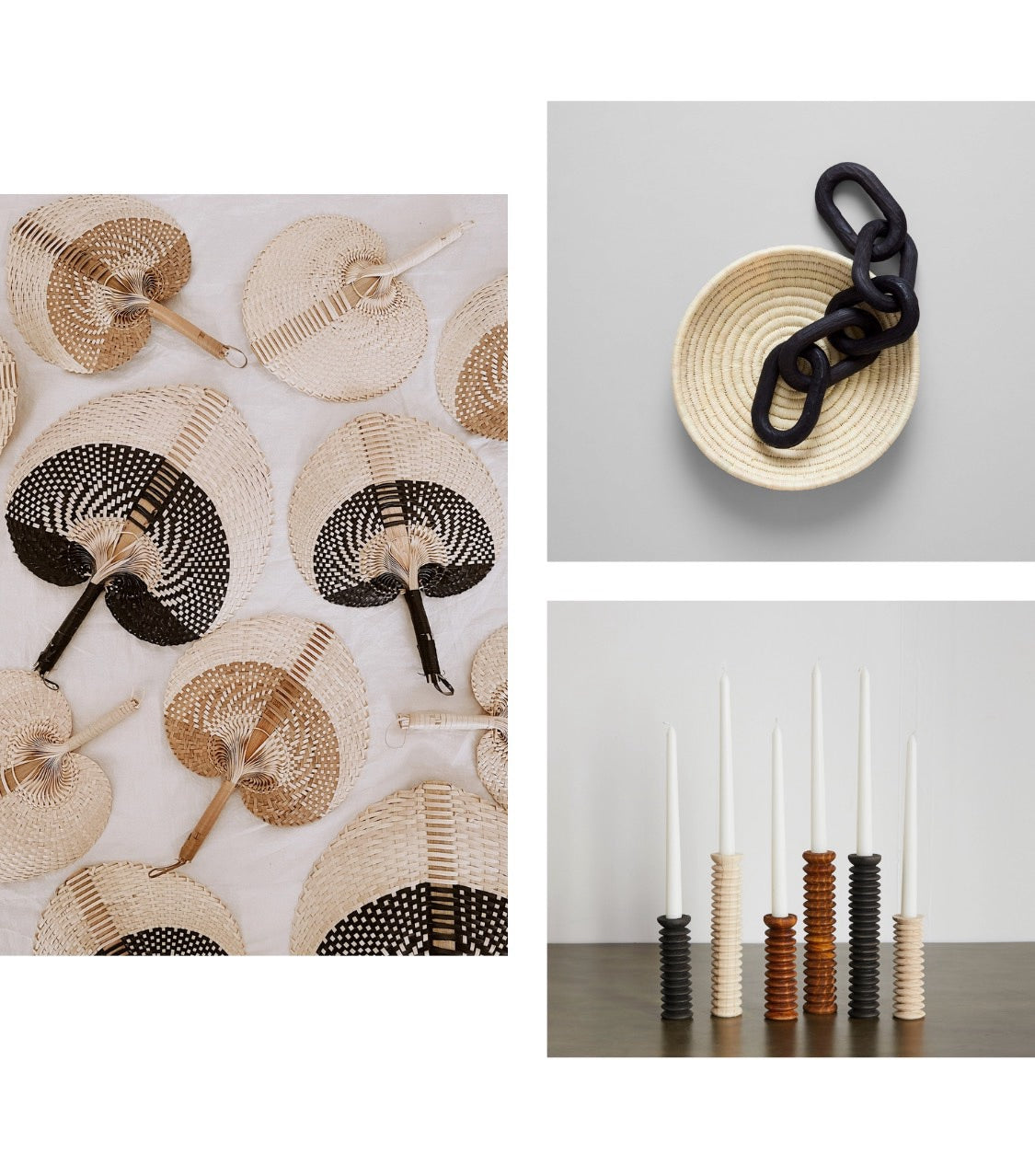
Slow decorating is a practice, not a destination. If you’re curious to see what intentional, ethically made décor can look like, we’d love to share what we’ve curated.